Tag Archive 'astronomy'

Jan 13 2011

Profile Image of Walt

Planetary Awareness

Filed under Blog Post

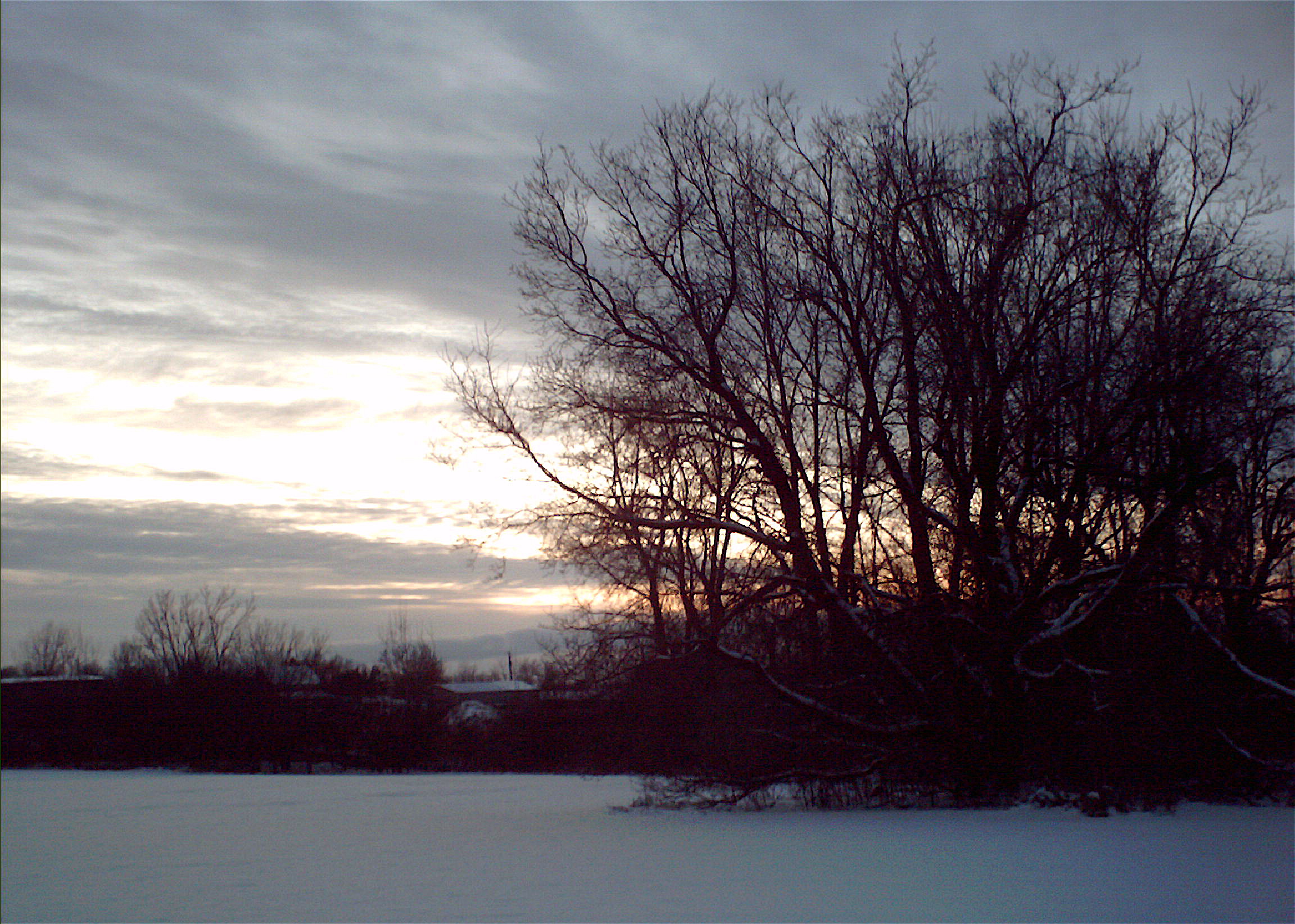
Recently my doctor prescribed an antibiotic for me that had to be taken four times a day.  I chose four easy times to remember: first thing in the morning, noon, dusk, and bedtime.  My wife Judy laughed when she heard this.  “Dusk?” she said incredulously, “Most people go by the clock.”  Perhaps so.  But dusk is a major event in my day.  Especially during the winter.

Dusk is when the world takes on a decidedly spiritual aspect, when it is easiest to comprehend the simple fact that we live on a planet.  On cloudy days this fact can be overlooked, but a clear or partly clear sky makes it hard to ignore.   At such times, the sun sets in a blaze of glory, the moon shows itself, and the first stars come out.  Sometimes it is quite the show.

At dusk I often stop whatever I’m doing and take a moment to acknowledge what is happening to the physical world.  My dog, Matika, is finely tuned to my habits and usually gets excited around this time of day.  She knows that we’ll be going out soon, and if she’s lucky I’ll toss the ball for her a few times while gazing towards the sky.  But not always.  Sometimes I like to just stand in the middle of the yard, taking it all in.

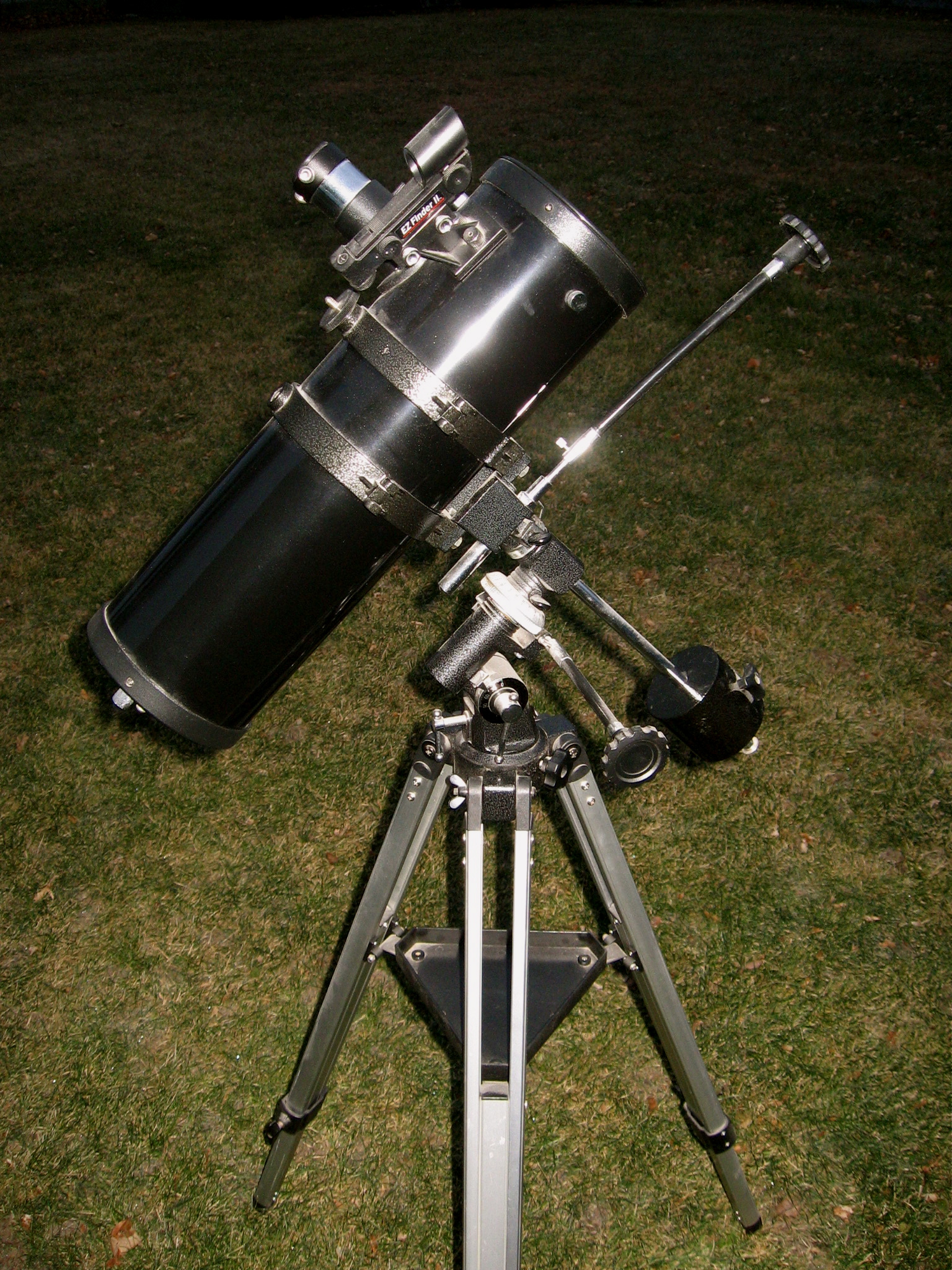
A few years back, when I dove into astronomy with reckless abandon, I eagerly awaited dusk.  When conditions were just right – clear sky with a late moonrise – I would set up my telescope just as the sun was setting.  While twilight faded, I would print star charts from my computer and map a route to some incredible deep-sky object: a nebula, star cluster or galaxy.  Now I’m not quite so fanatical about my viewing.  All the same, I still cultivate planetary awareness on a regular basis.  After all, it’s so easy to do at dusk.

During my brief sojourn in the Alaskan bush many years back, I enjoyed one sunset that seemed to go on for hours.  It was high summer and sun dipped beneath the horizon with great reluctance.  Then I experienced with full force the reality of being a creature living on a planet.  It might seem like a silly thing to say, but when you truly feel your presence on a sphere spinning on its axis, just being alive in this world seems absolutely remarkable.  The sky is suddenly a window to the cosmos, and planet that you inhabit is incredibly fecund.  Even in the dead of winter there trees, bushes and other kinds of vegetation patiently waiting for spring.  Even when this world seems cold, dark and hostile, the air you breathe seems to be made for you.

This is my planet, I often tell myself at dusk as if uttering a prayer.  This is the exact place in the universe where I belong.  And no matter how alienated I might become during the course of daily events, nothing can take this sense of belonging away from me.  I am a man on Earth and that is enough.  Everything else is superfluous.

One response so far

Sep 23 2009

Profile Image of Walt

Greater Nature

Filed under Blog Post

Judy and I were returning home from a late dinner out the other day when we looked up and saw the Milky Way splayed across the sky.  No moon, not even the wisp of a cloud anywhere, and the sun was long gone.  Thousands of stars glittered overhead.  Judy suggested that I pull out my telescope for a quick look.  I noticed that there were no bugs out and the air temperature was nearly ideal, so I did just that.

I pointed the instrument at the brightest object in the southeastern sky, thinking it could be Jupiter.  Sure enough, it was.  Once I centered that planet and its four biggest moons in the eyepiece, Judy took a look.  I told her that she was seeing what Galileo saw with his telescope four hundred years ago: another planet and its satellites – the first hard evidence that the Earth isn’t the center of the universe.  I think she was impressed, not so much by my words but by the image itself.  Yeah, when it comes to astronomy, seeing really is believing.

Judy has encouraged my stargazing over the years but hasn’t taken much interest in it herself.  Quickly sweeping through the sky, I looked for nebulae, recalling how impressive they looked to me when I first saw them.  I wanted to wow my wife.  I had no star map in hand, though, so I gave up that hunt before Judy lost all interest.  I went looking for Andromeda Galaxy, instead.  The Great Square was in clear view directly overhead, so finding Andromeda wasn’t too hard.  All I had to do was follow a familiar path away from the Square with my binoculars.

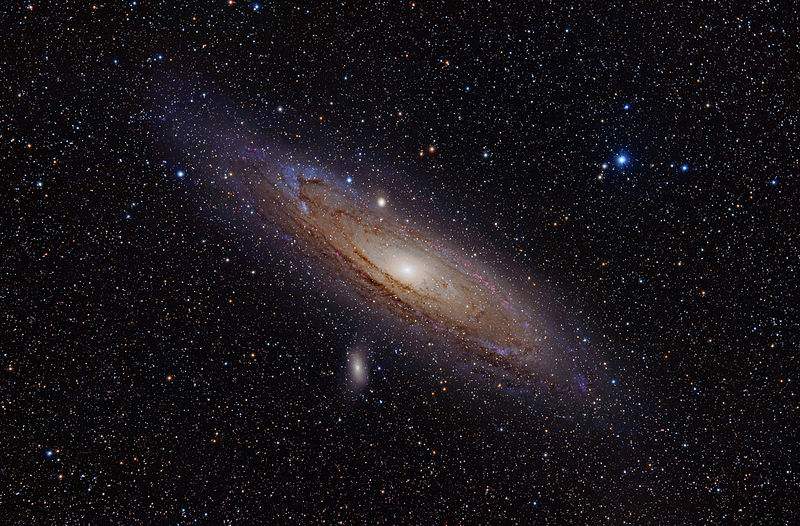
When finally I got Andromeda Galaxy in sight, I showed it to Judy.  She saw only a fuzzy spot in the eyepiece.  I told her that was all she was going to see with my humble instrument, then reminded her that she was looking at an object two and a half million light years away.  Numbers like that are difficult for anyone to grasp, though, so I expounded:  When the light now reaching her eye left Andromeda, our ancestors were just starting to use stone tools.  But even that was a gross understatement.  Spacetime defies all description, really.  All we can do is approximate it.

Nature is all around us all the time – no farther away than the blades of grass underfoot, the bee buzzing past, or the breeze caressing our brows.  We have come to know it well through our senses, and nearly everyone knows intuitively the difference between what is natural and what is man-made.  But there’s a greater nature out there that requires our reasoning skills as well as our senses to understand, where the boundary between the concrete and the abstract is blurred, where cosmic forces are hard at work and objects are much, much farther away than they appear.  I for one can’t gaze deep into the night sky without thinking about God, about nature with a capital “N.”  Someday I will wander aimlessly through that wilderness as I do the woods.  Someday I will wander and wonder without physical restriction.  Someday.

One response so far