Tag Archive 'being human'

Oct 17 2008

Profile Image of Walt
Walt

Surrendering Wilderness

Filed under Blog Post

I read a musing on wilderness the other day that really got me going.  It was written by the award-winning essayist, Marilynne Robinson, who has a way with words but clearly doesn’t know what she’s talking about.  She started out addressing the idea of wilderness in the most general terms, then discussed various environmental woes, then argued that every environmental problem is fundamentally a human one.  Maybe so, but getting from there to her conclusion was quite the stretch.

“I think we must surrender the idea of wilderness,” she concluded, “Accept the fact that the consequences of human presence in the world are universal and ineluctable, and invest our care an hope in civilization…”  Hmm…  Did I miss something?  I went back and reread the first part of the essay to make sure her idea of wilderness and mine are roughly the same.  They aren’t.  She was thinking of the wide-open, relatively uninhabited landscape of the American West; I was thinking of wild country, as close to being pristine as it can be in this day and age.  There’s a big difference between the two.  You can site a nuclear waste dump in the former, but not in the latter.

Maybe I should cut Ms. Robinson some slack.  After all, the best essays aren’t rigorously argued discourses.  But that phrase, “surrender the idea of wilderness,” buzzes around my head like a pesky fly.  The last thing in the world I intend to surrender is the idea of wilderness.  I will surrender the idea of civilization first, though I don’t believe for a second that the two are mutually exclusive.

Again I’m thinking I should cut Ms. Robinson some slack.  Perhaps she doesn’t see the difference between wilderness and the idea of wilderness.  I don’t know how to show her the difference without dropping her in the middle of the Alaskan bush for a couple weeks with nothing more than a little food, gear, and her own wits to stave off oblivion.  The idea of wilderness is a gross misrepresentation of the wild, I’ll grant her that.  But to write off the wild altogether in favor of the civilized – I’m not buying it. There’s more to being civilized, I think, than living in a gilded cage.  Much more.

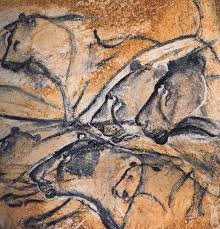
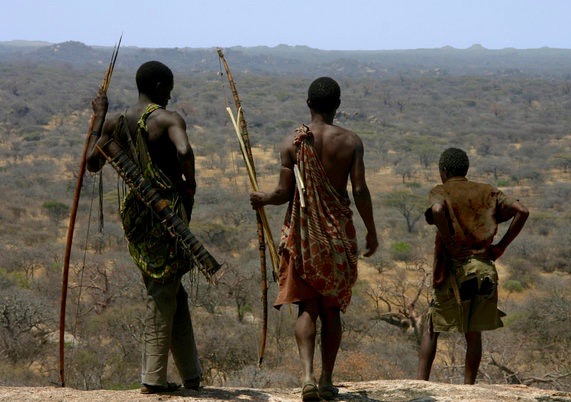
Ever since people have been able to throw up walls and declare themselves civilized (i.e. better than barbarians), there has been this prejudice against the wild.  I suspect that Ms. Robinson, along with many, many others living in this day and age, consider themselves intellectually and morally superior to our distant ancestors who scratched out a living towards the end of the last Ice Age.  If highly civilized people such as Ms. Robinson ever tried to chip a spearhead, attach it to a shaft, and get their lunch with it, they might see the fundamental error built into their preconceptions.

As for me, well, I spend a lot of time nurturing my philosophical abstractions but could just as easily be a fur-clad shaman fifteen thousand years ago trying to explain the world.  Reason is a handy tool but not the be-all and end-all of understanding.  I am human and wild, first and foremost.  I have sojourned in the wilderness on many occasions, however brief, and know the difference between what it is and any mere idea of it.  Civilization is optional.  The wild is not.

4 responses so far

Oct 02 2008

Profile Image of Walt
Walt

Philosophizing Nature

Filed under Blog Post

Yesterday my wife reminded me that I’m weird.  I don’t hold down a full time job.  I wander alone for days on end, grooving with the wild.  I sit around pondering the universe, then write down my thoughts.  Okay, I admit it – I’m an odd duck, and not just because I have no fashion sense and listen to avant-garde jazz.  Lately I’ve been spending a great deal of time philosophizing about nature and it’s only widening the chasm between mainstream society and me.  So I make it a point to do something normal each day, like surfing the net or watching TV.  That helps.

Immediately following my four-day retreat in the Adirondacks, I started revising a new set of philosophical essays that I committed to paper last spring.  Three weeks later, I’m still at it.  But I should finish this particular draft soon.  At the risk of mislabeling the work, I’d call it existential naturalism, even though I’m not really an existentialist or a naturalist.  I don’t particularly care for “-ists” and “-isms,” and that makes describing my worldview somewhat problematical.  But this label gives the reader some idea what my work is about, anyhow.

No philosophy worth taking seriously can be adequately expressed in bumper stickers.  That people even try is a tribute more to their sense of humor than to their wisdom.  But simplicity is a virtue in this day and age, so here are a few statements that characterize my worldview:  1) The mysteries of the natural world (the only world there is) are greater than our ability to comprehend them.  2) God, nature (in general) and human nature (in particular) are inexorably entwined.  3) I, Homo sapiens, am entirely responsible for what I make of myself and the world.

Do you see any glaring contradictions here?  I certainly hope so, otherwise I’m just wasting my time.  To be useful at all, philosophizing has to bring fresh ideas to the table.  Everything else is mere apology for the same old, worn-out worldviews passed down through the centuries, or meaningless blather.  I’d rather be thought of as a walking contradiction than someone who has nothing new to say.

The word “nature” means a thousand different things to a thousand different people.  Like the words “truth” and “love,” it defies easy definition, and that’s probably why philosophers find it so attractive.  But I am certain that such a thing as nature exists when I go for a long walk in the woods.  Only when faced with the countless abstractions of human society – things like dollar bills, contracts and “-isms” – do I start having my doubts.

As soon as I’ve completed this draft, I’ll disappear into the woods for a while.  I’ll wander about aimlessly, grooving on the wild and clearing my head.  Then brand new ideas will crop up.  It’s a vicious circle to be sure.  This is what makes me weird, I guess.  I keep going back to the well, even though this constant re-visioning only complicates matters.  Good thing my wife loves me for it, otherwise I’d be in deep trouble.  There’s not much call for woods wanderers in either the personal ads or the employment pages these days.

10 responses so far

Jul 24 2008

Profile Image of Walt
Walt

Hearing the Wood Thrush

Filed under Blog Post

The melodic, flute-like song of the wood thrush rang through the trees the other day, stopping me in my tracks the same way it did decades ago when I first heard it. Amazing. That little brown bird still has some strange power over me.

Like Thoreau, I feel the gates of heaven are not shut against me when I hear that song. In fact, they are wide open as I venture ever deeper into the shadowy forest. Manifest in those few simple notes is the great mystery of the wild itself and my unspeakable desire to fuse with it, to become as much a part of the forest as possible. After hearing the wood thrush, each step I take becomes a prayer – a whole new way of being in the world. All the travails of my species become some sad travesty performed in the distance. They are largely irrelevant in the face of the real. And for a second, maybe two, I know what it feels like to be fully human.

For years I have tried to articulate that feeling, to lend words to a visceral belief in the essential goodness of the world. So far I have not succeeded. When I tramp alone in deep woods and hear the thrush, I know in my heart that my own wickedness prevents me from speaking for the wild in any meaningful way. Like all other human beings, I am too arrogant, self-righteous, too caught up in my own sense of self-importance to say what needs to be said. And the moment I try, I become a charlatan.

There are times when I am wild. Standing naked on a rock next to an emerald pool in a mountain stream, dripping wet, I understand as the other animals do exactly what it means to be fully in the world. But that knowledge escapes me as I dress, and I am left wondering if perhaps there isn’t something fundamentally wrong with the way me and my kind have organized our lives down in the developed lowlands. What’s out of whack? I must confess that I have no more of an answer to this question now than I did thirty years ago. All I know is that an essential part of myself is as wild as the forest and no less endangered.

Last night I read an article in Audubon magazine about the wood thrush and how its numbers have diminished over the past half century. My wife brought the piece to my attention suspecting, no doubt, that it contained something I should know about. I can’t say I learned anything new. The article was rife with the kind of environmentalism that has become standard fare in our day and age. But somehow it left me with an even better sense of what the wood thrush stands for and why I continue writing and publishing under that name.

The wood thrush is a bird that needs large patches of unbroken forest to prosper. So do I. And there is still enough primate in all of us, I believe, for this to be universally true. We need the forest, we need the wild in ways that can’t be measured. And if the day comes when there is no longer enough wildland for the wood thrush to survive, then we will not survive either. Life will go on, the planet will turn, and some kind of brainy biped will persist. But not the human.

As goes the wild, goes the human. Of this I am now certain. The only question remaining is which way the story will play out. Will we ultimately win the Darwinian struggle for existence, or will we join the long list of species that have come and gone? The answer, I believe, lies in our collective will to wildness, or the lack thereof.

The great danger, of course, lies in how we define both nature and ourselves. As Emerson said, “Nature converts itself into a vast promise, and will not be rashly explained.” The same can be said about being human. This isn’t easy terrain to navigate. Yet the song of the wood thrush provides a clue as to where to begin. Hearing it, I know I must go deeper into the forest to understand – much deeper. The wild is waiting for me there.

2 responses so far