Oct 19 2026

It’s a Nova Scotia Thing
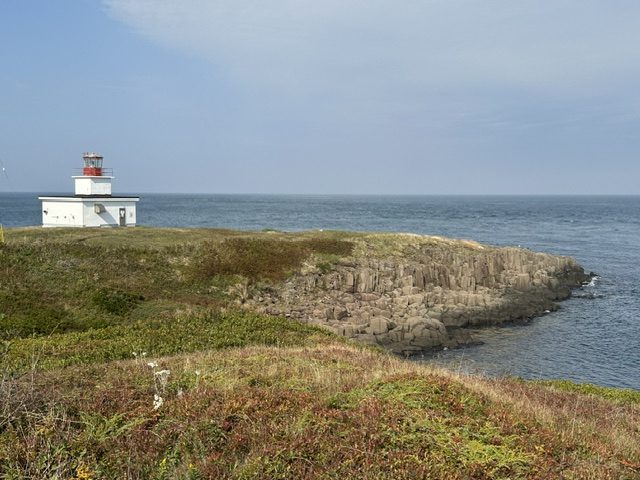
Judy and I just got back from a two-week trip to Nova Scotia. My head is still reeling from it. That maritime Canadian province surpassed our expectations. The natural beauty of the landscape and the friendliness of its inhabitants is well known. But there was something else that north Atlantic wonderland that charmed us.
We took the Cat, a car ferry, from Bar Harbor, Maine to Yarmouth on the southwest tip of the province. Then we drove the desolate, fogbound road to Digby through the darkness, feeling like we had just entered some otherworldly dimension. But our room at the Bayside Inn was bright, warm and welcoming. The next day we drove down the long, narrow peninsula to Brier Island to do some birding. Spotted a couple bald eagles there, not much else. But the interface of land and sea captured our attention and held it all day.
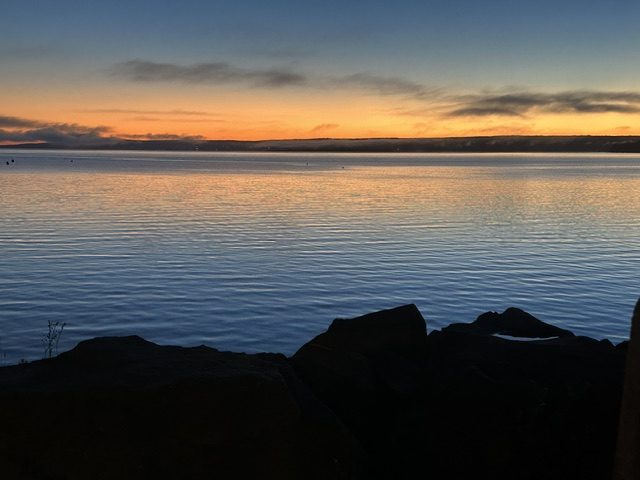
The Annapolis Basin on which Digby is located is chock full of history, but its maritime moods were even more interesting. I took some photos of the basin at sunrise. A couple hours later a cloud bank rolled in, changing everything. It isn’t uncommon in Nova Scotia to get three or four different kinds of weather in one day.
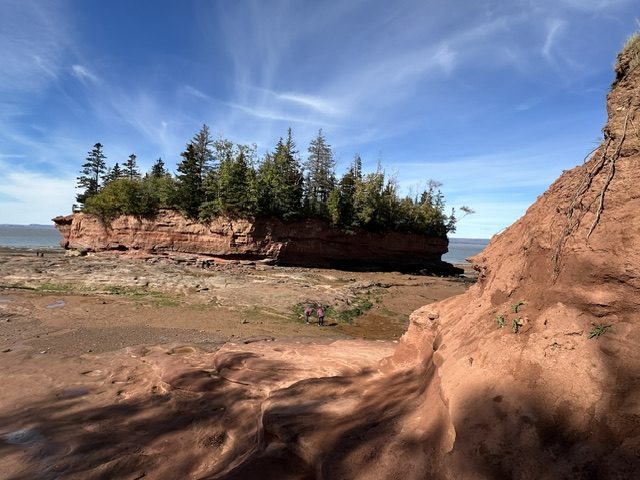
Leaving Digby, we drove along the shoreline of Minas Basin to Burntcoat Head where the tides of the Bay of Funny are the most extreme. There’s over 40 feet difference here between high tide and low tide. I walked out onto the mud flats at low tide to get a sense of it. Even then it was difficult to grasp.
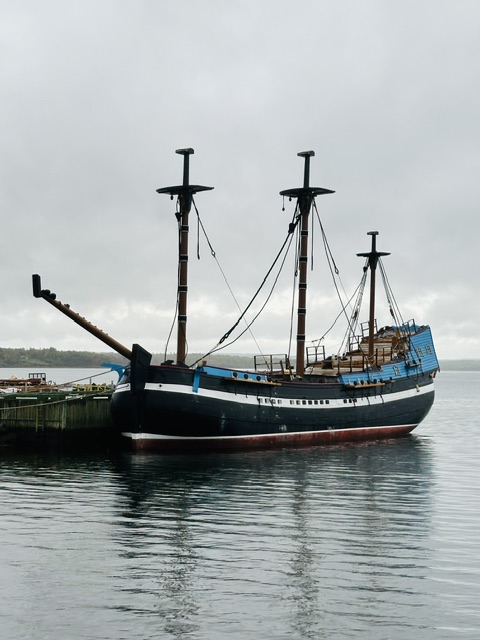
We stayed a couple days in Pictou, farther up the coast, where I checked out the Hector –– a replica of the 85-foot sailing ship that brought nearly 200 Scots to North America back in 1773. 18 of them died during the passage. Walking the decks of that ship, I couldn’t imagine the hardship they endured. This was just the beginning of the 50,000 Gaelic settlers who migrated to this land.
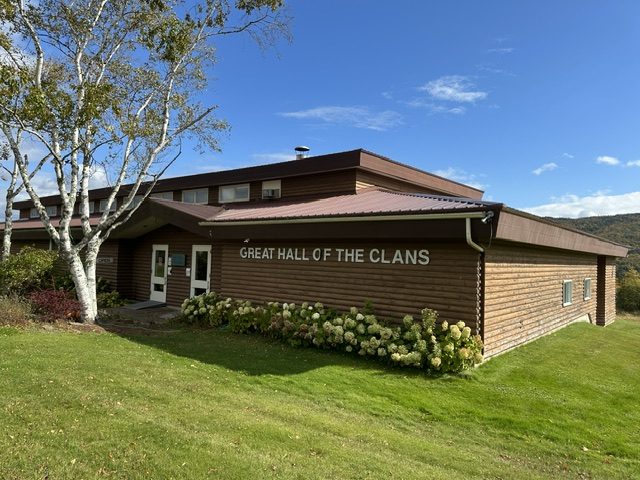
Going farther northeast up the province, we entered Cape Breton Island. Here the road signs are in both English and Gaelic. I was taken by surprise by the fact that Scottish culture is still alive and well in this part of the world. Judy got into it more than I did at first. But with a name like McLaughlin, I felt the urge to explore my roots a bit. We stopped into the Great Hall of the Clans at The Gaelic College to do just that.
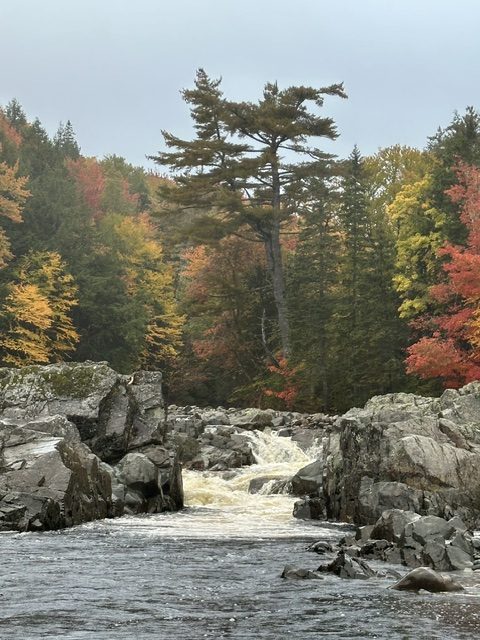
Those of you who know me know that the wild is what I’m all about. So I slipped away before breakfast a couple times to wander alone in the forests of Cape Breton. One day I hiked a short distance to Uisge Ban Falls just outside Baddeck. On another day I poked my nose in the North River Wilderness, going less than a mile to the Lower Fall. A steady, chilling rain thoroughly soaked me during that hike, so that was far enough. Still… I fought back a strong desire to venture deeper into that strangely familiar woodland.
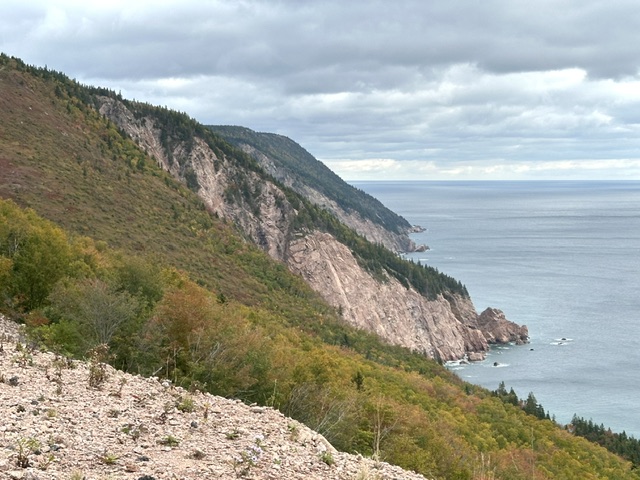
Driving the Cabot Trail through the Cape Breton Highlands was, beyond a doubt, the highlight of our trip. This is where the forested mountains drop into the ocean with dramatic effect. The Cabot Trail is a two-lane, paved road that loops around the highlands for 185 miles. We drove a little more than a third of it before retracing our steps back the Chanterelle Inn where we were staying. We drove as far as Dingwall at the northeastern tip of Nova Scotia that day. That was far enough.
It was a thousand-mile drive back home from Cape Breton through New Brunswick and Maine. Looking at a map, you wouldn’t think it would be that far. Yeah, Nova Scotia is close yet far away, familiar yet strange. Judy and I are both charmed by the Canadian maritime provinces, though we’re hard-pressed to say why. During the trip, I picked up a coaster with the words written on it: It’s a Nova Scotia thing, you wouldn’t understand. And that, I think, says it all.