Tag Archive 'backyard nature'

Mar 18 2010

Profile Image of Walt

The Red-wing Returns

Filed under Blog Post

When does spring begin?  Everyone has a different idea about that.  For some spring arrives when the crocuses pop up.  The more skeptical wait for lilacs.  Many look for robins feeding in their front yards.  For me it’s the return of the red-winged blackbirds.  Once they’re back, everything starts changing and changing fast.

I heard the red-wing’s unmistakable call the other day, while I was indoors reading.  I got up and went to the kitchen window and, sure enough, there it was on the ground right below the bird feeders.  The red and yellow markings on that bird are distinct.  The red-winged blackbirds are back.  The calendar on the wall tells me they shouldn’t be, but they are.

Judy and I spotted a tufted titmouse at the feeder nearly a week ago.  According to my bird book titmice don’t migrate, so seeing one doesn’t really count as sign of spring.  But we couldn’t help but take it as a good omen.  The red-winged blackbirds appeared shortly thereafter.

The grackles and cowbirds have also returned.  My wife doesn’t want me badmouthing those troublemakers like I did last year, so I won’t say anything more about them.  It’s clear, though, that the red-winged blackbirds are only the beginning of a great migration north.  The robins can’t be far behind.

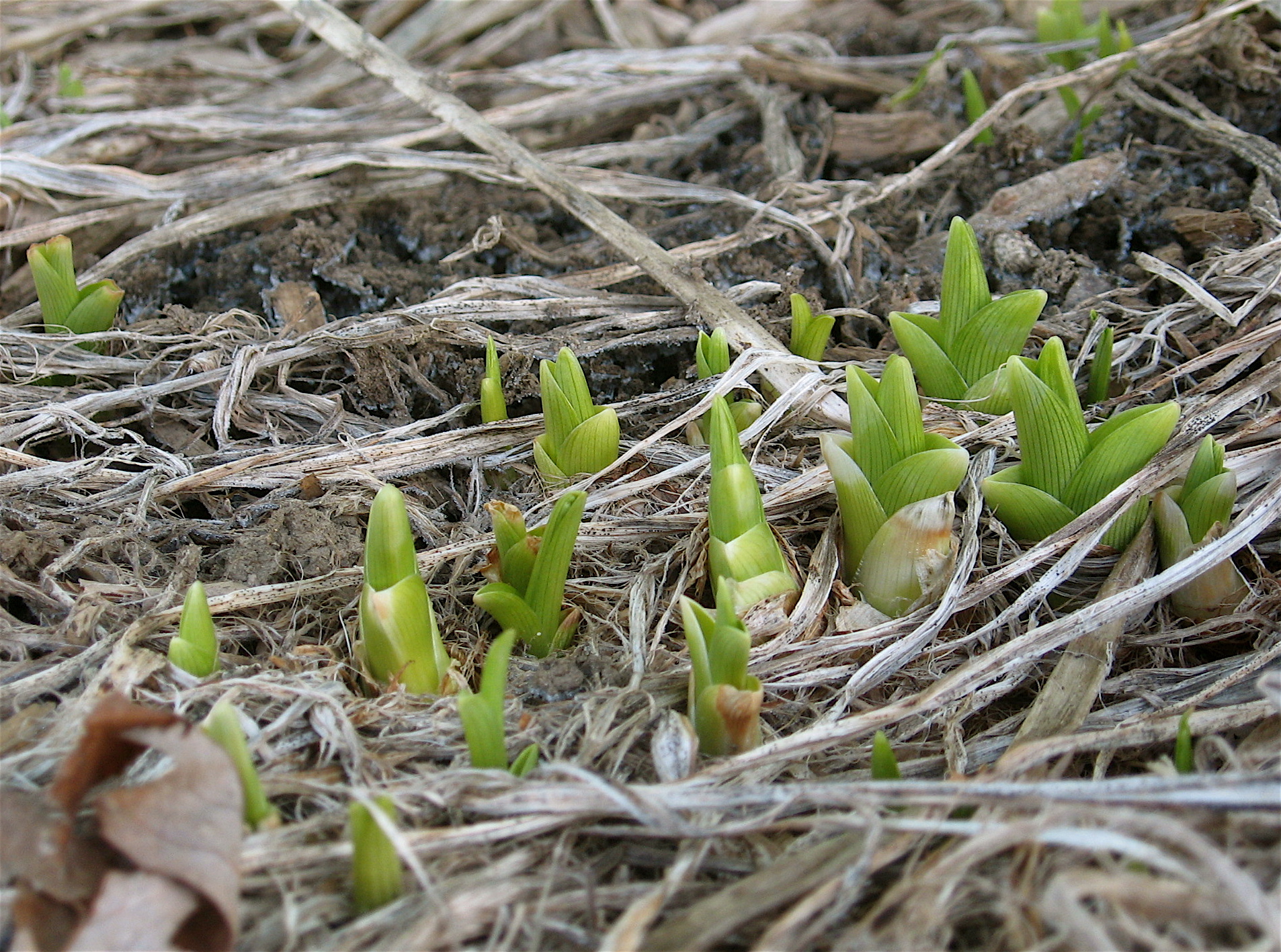
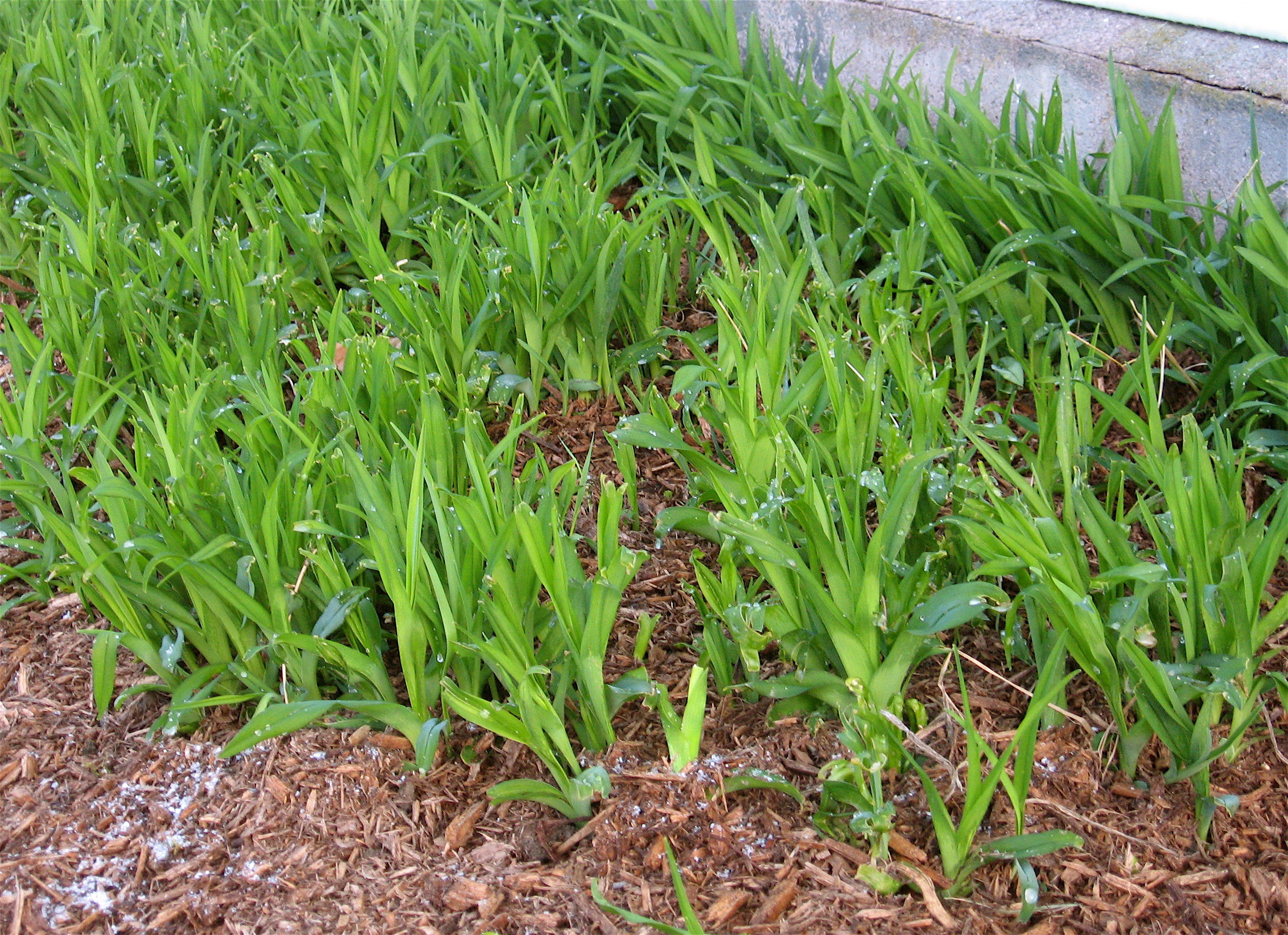
We have twelve hours of daylight now.  The Vernal Equinox takes place the day after tomorrow.  While that doesn’t necessarily mark the end of winter this far north, there are several indications that spring has come early this year.  The first green shoots of day lilies have pushed up in my front yard.  The grass is greening.  Mud wasps have already appeared on my porch.  And while there’s still plenty of snow in the woods, the snow piles around town are almost gone.

Where are my binoculars?  I keep hearing an unfamiliar bird song and want to go out and identify it.  Yeah, I’ve got the fever already.  No, I’m not foolish enough to put away my snow shovels just yet, or peel the caulk from my windows.  But there’s no sense denying what I see, hear or feel . . .

Suddenly a great weight has been lifted from my shoulders.  Soon my hiking boots will be caked with mud.  Bring on the cold rain.  I’m ready to wander aimlessly through a misty awakening forest as polypody and evergreen woodferns slowly spring back to life.  Something deep within me is stirring.  You can wait for a 70-degree day if you want, but I’m calling it right now.  It’s spring!

One response so far

Jan 18 2010

Profile Image of Walt

A Murder of Crows

Filed under Blog Post

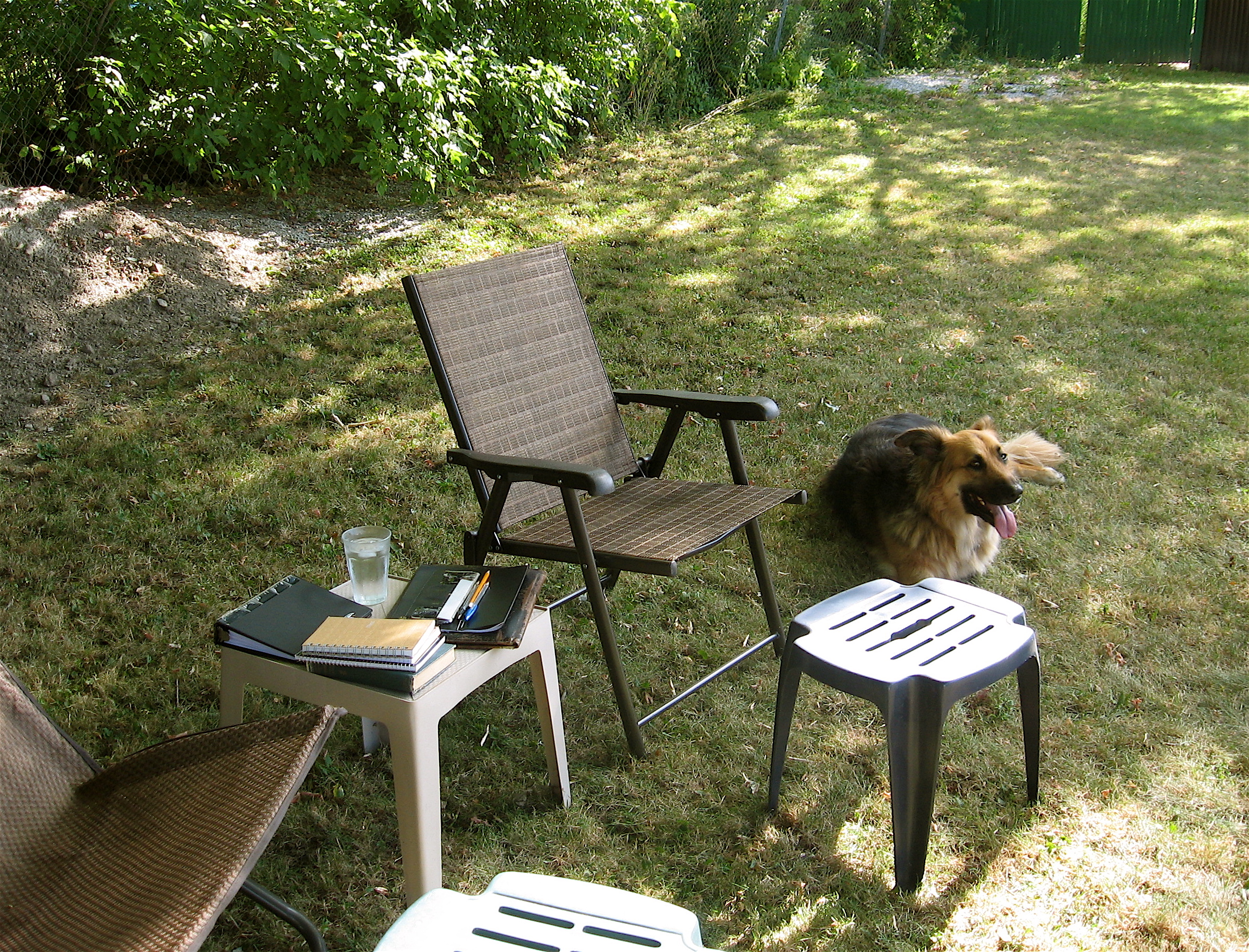
I went out at dusk yesterday to throw the ball for my dog, Matika, in the back yard.  While I was out there, a bunch of crows flew overhead, then a bunch more.  Then a great, dark stream of them flew past – hundreds of them, then hundreds more.  Their passing took five minutes.  I stood there awestruck by the avian display.  I’ve seen crows countless times, but never so many.

Where are they going?  Why are there so many of them?  What keeps so many birds alive in the middle of winter?  I like to think of myself as something of a naturalist, but even in my own back yard I am often stumped by the wild.

Black birds against a mottled gray sky.  A murder of crows in the dead of winter.  In Hitchcock’s movie, The Birds, crows play a particularly menacing roll, attacking school children. If all those crows landed in my yard, I’d step inside, certainly.  Yesterday over a thousand crows flew overhead in the fading twilight.  Occasionally one would let out a halfhearted caw, but for the most part they were silent.  As silent as the grave.

A flock of crows is called a murder because some farmers say they’ll gang up and kill a dying cow.  I find this hard to believe, but I’ve often seen them feeding on roadkill so I know they’re big carrion eaters.  Hence their association with death, especially in European culture.  I’ve also seen a crow being mobbed by a songbird after attacking its nest.  Yeah, they’re opportunistic as well – proof positive that Nature can be very cruel.

When I was sojourned in Alaska, I learned to appreciate the ways of ravens, those close cousins to crows.  Crows, ravens, jays and other corvids are intelligent creatures.  They know how to survive, that’s for sure.  In the Alaskan bush, I watched ravens carefully and took their lessons to heart.  Consequently, I developed a certain affinity with them.  But crows are still just crows to me.  Nature’s clean up crew at best.

My bird book tells me that crows gather by the thousands when they roost in trees at night.  That explains what I saw.  No doubt they have a roosting site nearby.  But in the depths of winter, I can’t help but sense something ominous about the presence of so many crows.  Black undertakers in a white landscape, they make me long for spring, anyhow.  I miss my green world.

Comments Off

Dec 28 2009

Profile Image of Walt

World Without Wildness

Filed under Blog Post

I found a field mouse in the basement the other day – an uninvited guest.  Its sudden appearance inside my home, the ultimate expression of domestication, is proof positive that the wild cannot be completely eradicated.  I find no small consolation in this.  I absolutely dread the possibility of living in a world without wildness, so I’d like to let that mouse stay.   But I’ll be putting out traps soon.   After all, I have to protect my investment.

I’ve been thinking a lot lately about the relationship between humankind and nature, about the difference between what is wild and what is not.  We use the terms “wild” and “civilized” as if they were opposites, as if one cancels out the other, but I don’t think that’s necessarily true.  Our relationship to the wild is much more complicated than that.  I believe that a part of the wild rests deep within us all, and that the wildness within cannot be completely eradicated any more than the weeds in our yard or the pests creeping into our houses.  All the same, it can be pushed back to the point where any discussion regarding it is moot.

When all that’s left of the wild is the occasional intruder in the basement, we will be living in a world without wildness.  When all nature is under our thumb, one way or other, then the wild won’t be worth thinking about.  When what we call nature is reduced to gardens, woodlots and preserves, and we have the means to genetically alter everything at will, then the wildness within us will be lost as well.  Then wilderness will be a theme park – a mere caricature of what it once was – and we will be only shells of our former selves.

I find it impossible to adequately define concepts like “wild” and “civilization” no matter how much I try.  These are terms fraught with ambiguities.  But this much I do know:  without a place to roam freely, we are merely cogs in a grand, meaningless, self-perpetuating system.  Aldo Leopold got right to the heart of the matter when he said:  “Of what avail are forty freedoms without a blank spot on the map?”   In an era of flying drones, GPS navigation, infrared cameras, and electronic tracking devices, this question is hardly an academic one.  Computer chips are showing up everywhere.  Soon it will be impossible to completely disappear into the wild no matter how hard we try.  Good news for fighting terrorism or finding lost hikers, but bad news for preserving the wildness essential to us all.

I fear the scientist with his radio collar more than the greedy developer with his bulldozer.  It doesn’t require a great deal of creativity to imagine a team of technicians descending upon a woods wanderer and tagging him or her like any other wild animal.  And why not?  The wild cannot be properly managed if there are gaping holes in the database.  So yeah, I’ll trap that mouse in my basement, but not without deep reservation.  Some part of the wild must be cultivated within me.  Some part of the wild must be allowed even in my own home.  Otherwise, civilization is all for nothing.

Comments Off

Jun 30 2009

Profile Image of Walt

The Simple Things

Filed under Blog Post

Once a year, Judy and I run a summer camp for our older grandkids, ages 4 through 12.  No parents allowed.  We’ve been doing this since 2004 and each year our plans get a little more sophisticated, with organized games, arts and crafts, and a theme of some sort.  But it’s the simple things that make the get-together work – things like running barefoot in the grass, being goofy, and drinking lemonade in the shade of our old maple tree.  The rest is just window dressing.

This year, I went a little crazy building a temporary, two-story playhouse out of wood that I called a space ship.  Judy spent the better part of an afternoon painting it.  The kids loved it, of course, but not as much as sleeping in the tent, swimming or fishing.  These activities are the staples of summer camp despite our elaborate constructs.

I took some of the kids for a hike up Aldis Hill while Judy picked strawberries with the rest.  The girls picked daisies from our wildflower garden and put them in the playhouse.  Several days later, the flowers are still there, still blooming in a paper cup full of water.   On the last day of summer camp, the kids collected shells and rocks while Judy and I set up a picnic lunch on the shore of Lake Champlain.  I showed the youngest ones how to skip stones across the water’s surface.  This is a skill every child should have.

Electronic devices are encroaching upon summer camp.  Judy and I are doing our best to keep them at bay.  It isn’t easy.  Cell phones, ipods and hand-held computer games are a big part of a child’s world these days.  All the same, a boy or a girl will drop everything and chase a frog halfway across the yard when given the chance.  If they’ve learned how to spot it, that is.

Our day lilies opened up the same day that the Virginia half of the family arrived.  Hummingbirds visited Judy’s feeder while they were here, as well.  Bees gathered pollen from the flowers in the front yard garden.  Thunderstorms came and went.  We casually pointed out the beauty and wonder of all these things as the children played.  It’s a subtle form of indoctrination, I suppose.

Judy and I don’t care if the kids remember the details of our annual get-togethers or not, as long as they remember the laughter, loving and all encompassing green.  Various phrases are used to describe this somewhat complex concept but, in my humble opinion, it all comes down to one word: summer.  Let the children know that much and the world will be a better place.  Sometimes it’s the simple things that make the difference.

2 responses so far

May 25 2009

Profile Image of Walt

Judy and the Hummingbirds

Filed under Blog Post

Judy loves hummingbirds but it has been years since she last saw one.  Two summers ago, she purchased a hummingbird feeder and hung it from the lilac bush a few feet from our kitchen window.  That allowed me a close-up glimpse of one once but Judy wasn’t so lucky.  So for the third year in a row she hung the feeder, hoping for the best.  I knew better than to encourage or discourage her.

Judy loves hummingbirds.  She loves them so much that she has one tattooed right above her ankle.  She says that every time she has seen one she has been on some kind of vacation – with me in the Adirondacks, with a friend on the Maine coast, or elsewhere.  More than once she has seen them at rest and has meditated on the fact that even a creature as frenetic as a hummingbird must stop every once in a while.  Seeing them when her own life was frenetic, she too has stopped.  There is a time for wingbeat intensity and a time to rest.

Many years ago, when I was alone in the Alaskan bush, I awoke almost daily to the low-pitched buzzing sound of a hummingbird hovering just outside my tent.  Even then Judy had an affinity for hummingbirds, so I couldn’t help but think that her animal spirit was watching over me.  Nowadays I can’t see a hummingbird or the mere image of one without thinking of her.  Judy’s existence and the essence of that tiny bird are somehow bound together.  Don’t ask me to explain how I know this or why it is so.  Some things go beyond words.

A couple days ago Judy put up her hummingbird feeder, hoping for the best.  She put up a fuchsia plant next to it, thinking that that might help attract the little busybodies.  She was right.  Yesterday, just before dusk, I looked out the kitchen window and saw a female.  Judy saw it a few minutes later, delighting in the encounter.  This morning, we both saw a male hummingbird at the feeder, repeatedly.  It looks like Judy has finally succeeded in attracting them to our home.  That makes this a red-letter day.

There are times when the wild is in our faces, and other times when it seems elusive.  Always it keeps us off-balance, somewhat amazed, unsure what to expect next.  That is the wonder and beauty of it.  Few creatures illustrate this as well as a hummingbird does, flitting around with such erratic intensity.  Maybe that is why Judy, wife of a woods wanderer, loves them so much.

Comments Off

Feb 25 2009

Profile Image of Walt

For the Birds

Filed under Blog Post

Hungry for a little color and vitality in the depths of winter, Judy went out and bought a bird feeder.  We hung it up, along with some suet, and soon added another feeder to the mix.  That was several weeks ago.  Since then, we have thoroughly enjoyed the avian circus playing out just beyond our kitchen window.  Some new species arrives every third day or so.  It’s been a good show and promises to get even more interesting as spring approaches.

Chickadees were the first to find our feeders, of course.  Sparrows, finches and juncos quickly followed.  Because of the suet, we’ve seen some larger birds as well: cardinals, blue jays and even a woodpecker.  That’s a lot of wildbird activity on a blustery, cold, snow-covered day.  Several times during the past few weeks, I’ve asked myself:  “Why didn’t we put up a feeder before now?”  No idea why.  All I know is that a bird identification book and a pair of binoculars rest permanently on our kitchen counter now, and we use them daily.  The newcomers have greatly enriched our lives.

Backyard naturalizing isn’t exactly high adventure, and birdwatching seems particularly genteel – the kind of thing one might expect from graying folks – but I engage in it now and then.  I have friends who are much more into it, who keep life lists, belong to birding organizations, and do bird counts.  I know one fellow who can hear a birdsong in the distance and tell you who’s singing it, nine times out of ten.  I’ve always envied him that.  But my interest in birds has never gone beyond the casual.  As for my wife, Judy, she’s relatively new to birdwatching.  She might really take to it this spring when the warblers return.  We’ll see.

The nice thing about birding is that anyone can do it.  Aside from a pair of binoculars and a bird book, no special gear is required.  And while hardcore birders take trips to faraway, exotic places, one can watch birds just about anywhere.  I first got into it while sitting in front of my bookstore during a slow year.  Yeah, they can be found in cities as well as forests and fields.  I once saw an owl in the middle of the road.  Go figure.

Okay, maybe putting up a feeder and watching birds flock to it is a sign of cabin fever – the desperate act of nature lovers in dire need of something vibrant in the end of winter.  I must admit, my eyes are hungry for green.  Judy’s eyes welcome any color other than brown, white, or gray.  We are both glad to have wildlife in our lives again.

Winter is long here in the North Country.  Some of our biggest snowstorms have come in mid-March.  And piles of the white stuff will linger another month, at least.  But the days are noticeably longer, water drips off roofs at midday, and the sap will start running soon.  Spring will come eventually.  It always does.  Until then our feeders will entertain us, no doubt.  Every day brings some small, new discovery – a great pleasure, always, even though it’s all for the birds.

2 responses so far

« Newer Posts